
Trust and Betrayal in Care
The Good Nurse: A True Story of Medicine, Madness, and MurderThis thread examines how the ordinary intimacy of nursing becomes the setting for Cullen’s crimes and for the difficult work of recognizing betrayal.
increasing Bearing strength in each event
 decreasing
Bearing strength in each eventdecreasingThe Promise of Nursing
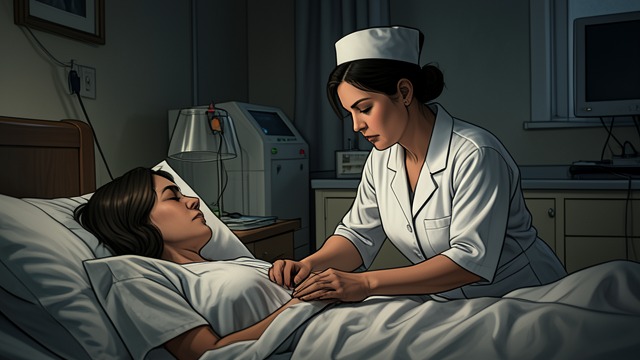
The Promise of Nursing
A Place to Belong
Nursing gave Cullen a community, a uniform, and a role centered on helping people who could not care for themselves. The professional identity offered the acceptance he had struggled to find elsewhere.
Intimacy at the Bedside
Care required touch, attention, and access to patients at their most vulnerable. Cullen learned the routines and trust that made this work possible.
The profession’s intimacy is part of what makes the crimes so disturbing. The same access that should have protected patients became a means by which Cullen could harm them unseen.
Families Trust the Nurse
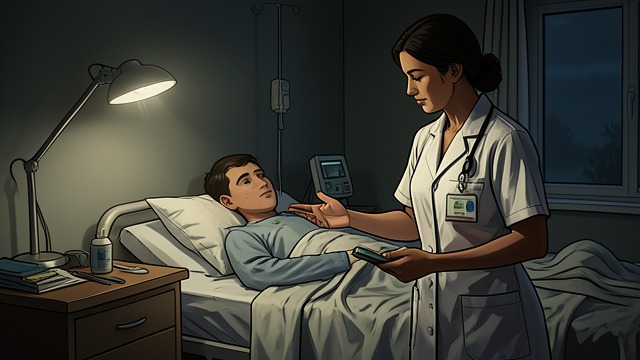
Families Trust the Nurse
A Familiar Authority
Families often relied on nurses to explain equipment, administer medication, and interpret sudden changes in a patient’s condition. Cullen could use that authority to direct visitors, answer questions, or appear helpful.
A Trust Reversed
Some relatives later remembered encounters that had seemed odd only after learning about the poisoning. The nurse’s uniform and technical language made it difficult to know when to challenge his actions.
The families’ trust was not foolish; it was a reasonable response to a role meant to protect the ill. Cullen’s betrayal exploited the very confidence that makes ordinary care possible.
Amy’s Belief in Charlie
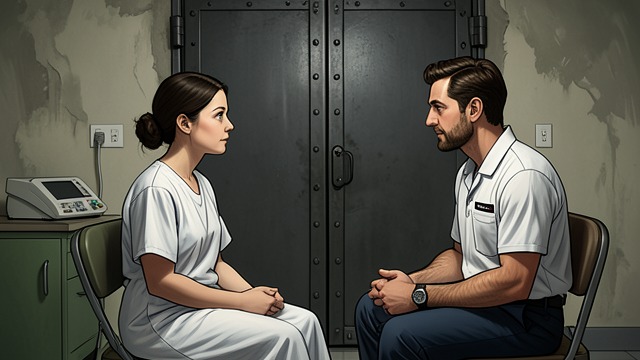
Amy’s Belief in Charlie
A Friend Feels Safe
Amy believed Cullen was a sensitive, funny coworker who needed her friendship. He helped her during illness and accepted the confidence she offered in return.
Trust Fractures
When Amy saw the records, she could no longer assume that kindness at work proved innocence. She had to hold affection for Cullen alongside evidence that he may have abused patients’ trust.
The break was not a simple switch from love to suspicion. Amy’s emotional knowledge of Cullen made the evidence more painful, while her professional responsibility made silence impossible.
The Informant’s Double Role

The Informant’s Double Role
Careful Contact
Amy continued to talk to Cullen as a friend while relaying information to detectives. She monitored her words, managed her fear, and tried to preserve the trust needed to keep him speaking.
Emotional Consequences
The role required her to use intimacy for an investigative purpose. Her conversations could sound affectionate while her actual goal was to protect future patients and help build a homicide case.
The arrangement blurred the boundary between friendship and performance. Amy’s loyalty to patients demanded deception toward a man she still cared about.
Care After the Crime

Care After the Crime
A Prison Visit
Amy visited Cullen years after the confession and asked him to forgive her for what she had done. Cullen told her that the arrest was not her fault, though he still did not know that she had been the informant.
An Unfinished Bond
The visit did not restore their former friendship or settle every question between them. It showed that compassion and accountability could remain entangled even after the crimes had been exposed.
Their final connection is not a reconciliation of victim and offender, but a complicated relationship between two people who once trusted each other. The truth of that friendship survives alongside the harm Cullen caused.
1984 to 1987
1993 to 2003
2002 to November 2003
November to December 2003
2012
